Category: Buyer Guides

  • Real Estate Videography and All You Should Know About It

    Real Estate Videography and All You Should Know About It

    Real estate videography is a rapidly growing trend in the real estate industry, offering a powerful marketing tool to showcase properties and attract potential buyers. With the increasing availability of affordable video equipment and editing software, real estate agents and sellers can easily create high-quality videos to highlight the unique features of a property.

    In this article, we will explore everything you need to know about real estate videography, including its benefits, types of real estate videos, and tips for creating and promoting high-quality videos.

    What is real estate videography?

    Real estate videography refers to the use of video marketing in the real estate industry. It involves capturing and showcasing properties through video, providing potential buyers with a more immersive and interactive experience. By using video, real estate agents and sellers can showcase a property’s features, layout, and overall appeal in a way that photos alone cannot.

    Benefits of real estate Videography

    Real estate videography offers numerous benefits that can help agents and sellers market their properties more effectively, reach a larger audience, and ultimately increase the chances of a successful sale.

    a)    Captures Attention.

    Video content is a highly engaging and attention-grabbing medium. Real estate videos can capture the viewer’s attention and showcase the property’s unique features in a way that photos and text cannot.

    b)   Increases Exposure.

    Real estate videos can be shared across multiple platforms, including social media, YouTube, and real estate websites. This exposure can help increase the property’s visibility and reach a larger audience of potential buyers.

    c)    Enhances Perception of Property.

    A well-produced real estate video can make a property appear more desirable and luxurious than it may appear in photos or in person. This can help generate more interest and ultimately lead to higher offers.

    d)   Provides Better Insight into Property.

    Real estate videos can provide a more comprehensive view of the property, including the layout, room sizes, and overall flow. This can help potential buyers get a better understanding of the property’s features and decide whether it’s a good fit for their needs.

    e)    Showcases Unique Features.

    Real estate videos can highlight unique features of the property, such as views, outdoor spaces, and architectural details. These features can help set the property apart from others in the market and make it more attractive to potential buyers.

    f)     Saves Time.

    Real estate videos can save time for both agents and potential buyers. Agents can use videos to showcase multiple properties to potential buyers, while buyers can use videos to narrow down their search before scheduling in-person viewings.

    g)    Builds Trust.

    Real estate videos can help build trust with potential buyers. By showcasing the property in an honest and transparent way, agents can establish themselves as trustworthy and reliable professionals.

    Types of real estate videos

    There are several types of real estate videos, each with its own unique purpose and benefits. Real estate agents and sellers can use a combination of these videos to showcase properties.

           i.         Property Walkthroughs.

    Property walkthroughs are the most common type of real estate video. They typically feature a guided tour of the property, showcasing each room and highlighting unique features. These videos are essential in providing potential buyers with a comprehensive view of the property, its layout, and its overall condition.

         ii.         Aerial Videos.

    Aerial videos offer a unique perspective of the property and surrounding area by providing a bird’s eye view of the property. Drones are often used to capture these videos, which can showcase the property’s location, size, and other features that may be difficult to capture from ground-level footage.

        iii.         Lifestyle Videos.

    Lifestyle videos are used to showcase the lifestyle and experience that comes with living in a particular property. These videos often highlight the property’s proximity to local attractions, such as restaurants, parks, and other amenities, and are designed to appeal to potential buyers looking for a particular lifestyle.

        iv.         Agent Introduction Videos.

    Agent introduction videos are used to introduce the agent to potential buyers and establish trust and rapport. These videos typically showcase the agent’s experience, expertise, and personality and can help set the agent apart from others in the industry.

         v.         Testimonial Videos.

    Testimonial videos feature satisfied clients sharing their positive experiences working with the agent or selling their property. These videos can be a powerful marketing tool, as they provide social proof of the agent’s competence and effectiveness.

        vi.         Virtual Tours.

    Virtual tours use 3D imaging technology to provide an immersive experience of the property. Potential buyers can explore the property at their own pace, zoom in and out, and get a better sense of the property’s layout and flow.

    How to take quality videos

    Taking quality real estate videos requires attention to detail and some technical knowledge. Here are some tips to help you take high-quality real estate videos.

    a)    Use a High-Quality Camera.

    The quality of your camera will have a significant impact on the overall quality of your video. Choose a camera with a high resolution and image stabilization features to ensure your video is clear and steady.

    b)   Plan Your Shots.

    Before you start shooting, take some time to plan out your shots. Consider the layout of the property and the features you want to highlight. Create a shot list and storyboard to guide your filming.

    c)    Use Proper Lighting.

    Lighting is critical in video production. Use natural lighting as much as possible, but be sure to avoid shooting in direct sunlight or harsh shadows. If needed, use artificial lighting to supplement natural light.

    d)   Keep Your Shots Steady.

    Stability is essential in real estate videography. Use a tripod or stabilizer to keep your shots steady and avoid shaky footage.

    e)    Pay Attention to the Audio.

    Clear audio is just as important as clear video. Use an external microphone to capture high-quality audio and avoid background noise.

    f)     Edit Your Video.

    After you’ve finished shooting, take some time to edit your real estate video. Trim any unnecessary footage and use transitions to create a seamless flow between shots. Add background music and captions to enhance the viewer’s experience.

    g)    Practice and Refine Your Technique.

    Like any skill, real estate videography takes practice. Experiment with different angles, lighting, and camera settings to find the techniques that work best for you.

    By following these tips, you can create high-quality real estate videos that showcase properties in the best possible way and attract potential buyers.

    How to promote your real estate videos effectively

    Promoting your real estate videos effectively requires a multi-channel approach and a willingness to experiment with different strategies. Here are some tips to help you promote your videos and reach a wider audience.

           i.         Share on Social Media.

    Share your videos on your social media accounts, including Facebook, Twitter, Instagram, and LinkedIn. Use relevant hashtags and tags to increase your visibility and encourage others to share your videos.

         ii.         Embed on Your Website.

    Embed your videos on your website and blog. This will help improve your website’s search engine optimization (SEO) and provide visitors with an engaging way to view your properties.

        iii.         Use Email Marketing.

    Use email marketing to share your videos with your email list. Create a catchy subject line and include a link to your video in the email body.

        iv.         Partner with Influencers.

    Partner with influencers in your industry or location to share your videos with their followers. This can help expand your reach and increase your credibility.

         v.         Use Paid Advertising.

    Consider using paid advertising, such as Google Ads or Facebook Ads, to promote your videos to a targeted audience. This can help increase your visibility and drive more traffic to your website or listings.

        vi.         Include in Property Listings.

    Include your videos in your property listings on real estate websites and portals. This can help make your listings stand out and attract more potential buyers.

      vii.         Measure and Analyze Results.

    Use analytics tools to measure the performance of your videos and refine your promotion strategy over time. This will help you better understand what’s working and what’s not so that you can adjust your approach accordingly.

    Conclusion

    Real estate videography is a highly effective marketing tool that can help real estate agents and sellers in Kenya to showcase their properties and attract potential buyers. As highly skilled and experienced real estate videographers, we understand the importance of creating high-quality videos that capture the unique features and appeal of a property. We also understand that shooting real estate videos can be a daunting task for some individuals and can evoke feelings of fear and uncertainty. Therefore working with us, whether you need a virtual tour captured, aerial shots taken by drones, or detailed slideshows that highlight every aspect of a property, we will be able to help you in every way. Our team is equipped with the latest video equipment and editing software, ensuring that we deliver videos that are both visually stunning and effective at generating interest in your property. If you’re looking for professional real estate videography services in Kenya, please do not hesitate to contact us today on 0726 982 982. We would be delighted to discuss your project and help you achieve your marketing goals through the power of video.

  • Online Strategies to Impress Buyers and Skyrocket Your Real Estate Sales

    Online Strategies to Impress Buyers and Skyrocket Your Real Estate Sales

    Everyone likes buyers, regardless of how they get them. But do you know you should go the extra mile to impress buyers and boost sales? Well, buyers have standards, that’s why you should find ways to convince them to buy from you.

    You should provide a great customer experience concerning your real estate business in Kenya. You can impress your buyers using a well-designed website that is easy to use, responding quickly to customer inquiries, and providing helpful advice and guidance.

    This blog will show you online ways to impress buyers, which will boost your sales. Stay tuned to our mailing list to grow your real estate business with our free tips in the blog section.

    Ways to Impress Buyers and Boost Sales

    Create an Attractive Website 

    Creating an attractive website is a great way to impress potential buyers and boost sales. Real estate businesses make a great first impression and build a strong reputation by designing a visually appealing and user-friendly website.

    Your real estate website should be easy to navigate, and users should quickly find the information they need. The design should be visually attractive, which makes users feel comfortable and confident.

    Additionally, it should contain information about the company and its products and contact information so customers can reach out with questions or comments. Creating an attractive website can be a great way to show potential buyers your business is professional and trustworthy, which leads to increased sales.

    Mobile Optimization

    When building a real estate website, consider optimising it for mobile users since that’s the most significant number of your audience. Mobile optimisation involves adjusting the design and layout of the website to suit the smaller screens of mobile phones.

    Ensure the website is easy to navigate, the images have minimal sizes, and the content fits the device. Additionally, responsive design techniques can help ensure the website looks great on any device.

    By optimising websites for mobile, your real estate business can impress its customers. As a result, customer satisfaction will boost your property sales.

    Social Media 

    Social media is essential for businesses to reach and engage with customers, build relationships, and increase sales. You can create social media accounts that help you interact more with your target audience. 

    You can build relationships with potential buyers, post helpful content, engage with customers, and showcase products by creating a presence on popular platforms such as Facebook, Instagram, LinkedIn, and Twitter.

    Additionally, you can use social media advertising to target specific audiences and increase sales. Through the strategic use of social media, you can create a positive impression with buyers and boost sales.

    High-Quality Content 

    In 1996, Bill Gates, the founder of Microsoft, wrote an essay on; The Content is King. Gates said that the content could impress anyone who sees or reads it. This means that your content can determine how you impress your real estate clients.

    High-quality content is an integral part of attracting buyers and boosting sales. When posting content on social media or your blog, you should ensure the research is top-notch and accurate.

    The content should be engaging, providing readers with valuable information need. To reach more audiences, you should optimise your content for search engines, which will help boost your sales.

    Your content should also target a specific audience, providing a personalised experience to convince them to purchase. Additionally, you should regularly update your content to ensure buyers always get the latest information. 

    Real Estate Lead Generation Sources: 7 tried lead generation strategies

    More Video Content 

    Most people are falling in love with video content. As a result, most realtors are shooting real estate videos to market their properties. That’s why you should create more videos to impress your buyers and boost sales.

    Video content lets you showcase your product or service engagingly, allowing potential buyers to learn more about what you offer and why they should buy it. Videos can help you showcase your property to your target audience.   

    Additionally, videos can create an emotional connection with potential buyers, helping to establish trust and loyalty. 

    With the right video content, you can impress buyers, drive more sales, and build a more substantial online presence.

    Pricing

    One thing that attracts potential buyers to a property on sale is the tag price. In most cases, more buyers will consider cheaper properties that are comfortable.

    Setting a competitive price helps to attract potential buyers. However, you should ensure that your property’s quality matches your set price. It’s always a good idea to repair any broken parts of the property whenever listing it for sale.

    Therefore, when setting up your property’s price, it’s an excellent idea to set a moderate price within the market range. 

    https://youtube.com/watch?v=_1s2pCpm4-Q

    The Bottom Line

    Once you impress your potential clients, you will likely close more real estate deals. Therefore, it’s crucial to implement the aforementioned online ways to impress buyers, and you’ll boost your sales.

    Remember to comment and subscribe to our mailing list to be among the first to learn about our free updates. 

    Frequently Asked Questions

    How do you impress buyers in your business?

    The primary way to impress your buyers is by providing them with all they need from your business. In addition, ensure you are responsive to all their queries, and you’ll eventually close more sales deals.


    How can you improve your sales?

    The first step is ensuring you sell quality products. For instance, ensure your properties are well maintained. If the first buyer likes your properties, they will refer you to their family and friends, and you will automatically increase your sales. The other way to improve your sales value is by improving the value of your property. If you repaint and add ceiling, tiles, and other luxury features, you will sell the house at a higher cost.


    What power words attract customers to your products and services?

    Customers tend to act upon some powerful words that trigger their emotions, like:

    • Guaranteed
    • Free
    • Limited
    • Easy
    • Fast
  • Starting Points for Buying Your First Home in Kenya

    Starting Points for Buying Your First Home in Kenya

    Who wouldn’t love to have their dream home in Kenya? Well, we all love stability, and one way to be in a state is to have a place to call home. But what is the starting point for buying a home in Kenya? What do you need to do to buy your first home successfully?

    Before buying a home, it’s crucial to understand the process and the best starting point for doing so. This blog explains how you should prepare before buying your first home in Kenya. Making the right choices when dealing with a big transaction is important.

    We aim to help homebuyers and investors to make excellent decisions when buying and selling property in Kenya. We have adequate knowledge of the history and trending issues in the Kenyan property market.

    Therefore, be among the first to receive our timely updates on the current market in Kenya. You can also check our property listings to browse properties in your preferred location.

    1. Overview of the Kenyan Housing Market 

    The Kenyan housing market is dynamic and vibrant, offering a wide range of housing options for buyers of all budgets. The Kenyan property market has many players, including homebuyers, commercial property investors, and the government’s commitment to providing affordable housing.

    The availability of mortgages and various housing options has made the Kenyan housing market an attractive investment destination. Kenya has a wide range of housing options, from luxurious homes to affordable, basic housing.

    The Kenyan housing market is an excellent starting point for anyone looking to buy their first home, whether you are in the diaspora or not.

    2. Types of Houses

    The Kenyan property market has various types of houses you can choose from when buying your first home.. 

    If you prefer the convenience and security of a gated community, there are options, such as maisonettes, bungalows, apartments, etc. if you need a home in a rural area with huge spaces, there are options, such as villas, estate homes, and ranches.

    There are beachfront homes and cottages for those seeking a more relaxed lifestyle along the coastal regions of Kenya. Regardless of the type of home you choose, Kenya has plenty of options to suit all needs and budgets.

    3. Average Prices

    Budget is the main determinant of the type of house you will buy in Kenya. Some houses are cheap, while others are very expensive and need a big mortgage loan to acquire one. 

    The average price for buying a home in Kenya varies depending on the property’s location, size, and condition. Generally, the price starts from Ksh 3 million going upwards.

    Location determines much about the cost of a home. For instance, buying a home in Nairobi and its metropolitan area will be more expensive than buying in a rural area. 

    Additionally, the cost of land, building materials, and labor can also influence the cost of buying a home. 

    You can compare the cost of buying a complete house and the one of buying land and building a home. Depending on the location and commitment, you can choose an option that works best for you.

    4. Location Considerations 

    When buying your first home in Kenya, it is vital to consider the property’s location. Location plays a significant role in the success of your future home, as it can affect factors such as access to amenities, security, transportation, and the overall quality of life.

    Researching the area and local amenities, such as schools, hospitals, supermarkets, and public transportation, is important. Additionally, you should take into account the safety of the area and the potential for future growth.

    You should also consider the cost of living in the area because it may affect the budget for your home. 

    If you choose a location with potential future growth, you can easily start an Airbnb business if you need some income from your house.

    5. Financing Options 

    When buying your first home in Kenya, you should start by thinking of the financing options you have.  You can start by saving enough money for a downpayment, and if you are able, you can save money for the entire project.

    a. Personal Savings

    Having some personal savings is an important starting point for buying your first home in Kenya. It is advisable to start saving as early as possible to build a good base for your future home-buying needs. Even if you get a mortgage loan, you will need a downpayment of at least 5% of the home buying price before getting the loan.

    Most banks in Kenya offer you a chance to save money automatically. The advantage of having a personal savings kit is that it offers a safe and secure place to store your money and watch it grow.

    Additionally, having a personal savings account also offers you an excellent opportunity to manage your finances better and be prepared for any financial emergencies. 

    b. Mortgages

    A  mortgage is a loan specifically that helps home buyers in Kenya finance their first home purchase. Banks provide a long-term loan to cover a portion of the home’s purchase price. 

    Most banks in Kenya ask for at least 5% of the home price as the downpayment for the loan. Some other banks can help you buy land and build your dream home.

    Mortgages also cover the expenses associated with owning a home, such as taxes and insurance. Since saving millions of money to buy a home can be so challenging, it’s easier to take a mortgage loan to own a home faster.

    However, you should be sure of your income sources to repay the mortgage because failure to repay the loan means the lender will repossess your home. Actually, the home stands as the security of the mortgage loan.

    https://youtube.com/watch?v=cBBgis9NTAE

    Conclusion

    The starting point of buying your first home in Kenya requires dedication to research the Kenyan property market. The only way you can get the best deal is by doing thorough research on anything you plan to do when buying your first home.

    However, real estate agents can ease your work in finding the best locations for your new home in Kenya. They can also link you with professionals like property lawyers and mortgage lenders. Find your preferred real estate agent today on our site.

    Frequently Asked Questions

    1. What is the first step in buying a home in Kenya?

    Once the idea of buying a home clicks your mind, you should research to know the current market price ranges for the home you want to buy. After having a figure in mind, you should find ways to save money for a downpayment if you are taking a mortgage loan. If you are buying cash, you should increase your income streams to save enough money to buy your dream home. You should also know about some other hidden costs to save money.


    2. What is the most important part of buying a home in Kenya?

    When buying your first home, consider choosing the best location with high future potential growth. In addition, your security should come first when choosing your dream home. In addition, ensure to check your home for any damages before you commit yourself to buy the one.


    3. How much should I have before buying a home in Kenya?

    You should save around 25% of the home price. This amount will help you pay for a downpayment and cater for any other expenses like moving costs.

  • Things to Consider During First-time Property Visit in Kenya

    Things to Consider During First-time Property Visit in Kenya

    Visiting a property you are about to buy is one of the exciting and anxious moments in an investor’s journey. A first-time property visit can unveil more of the investment journey you are about to start. It’s important to consider everything, from the price tag to the quality of the property you are buying.

    This blog explains what you should do during your first-time property visit to Kenya. Keep reading to know what you should check and the questions you should ask the owner about the property. These ideas should help you make the right choices when buying a property. We shall also give you the quality features of any property you wish to buy in Kenya

    We have a series of properties that can interact with you. Check our trusted property listings that might just reveal your next property.  

    What to Consider During First-time Property Visit in Kenya

    You should consider the following aspects when visiting a property for the first time in Kenya. 

    What is the location?

    The location is the most critical part of buying property, whether residential or commercial. If you are searching for a commercial property in Kenya, you should find an area with high growth potential. You can buy in an already developed region, like the urban centres, or an area with potential growth. 

    If you need a residential home, you should also find a place to easily access amenities such as schools, hospitals, security, water, and electricity. These are the basics that should make your life comfortable in any neighbourhood.

    Therefore, the location is a critical factor to consider when you visit a property for the first time. Check whether the area has excellent roads and reliable water sources. In addition, you should know whether there is a nearby police post in the area for security enhancements.

    How is the general property’s condition?

    Next to the location, the property’s condition plays a significant role in how you will enjoy your ownership and stay in the house. You don’t have to buy a house that’s in bad-looking condition. 

    During your dist time property visit in Kenya, you should be keen on every property detail. Check the roofs from the outside, preferably a higher place where you can see the top of the house. 

    Even if the house looks new, you should be keen on doors and window conditions. Sometimes sellers repaint the house and forget to fix some other issues, which may cause you trouble later.

    Check also the ceilings, floor, boards, and the conditions of the walls. You should be keen to identify anything that may be an obstacle. 

    Ask the seller some questions

    Don’t let the Property’s good condition sway you to make haste decisions without asking the property owner some questions. For instance, ask them why they are selling the property. Although some may lie if they have a wrong reason to sell, you should note the information to research it further by asking in the neighbourhood or a real estate agent

    Ask the owner about the house’s history, like how long they have been the owner and the previous owner, if any. Again, you should go further and do due diligence on everything the seller tells you. 

    If you find any damages that require fixing, ask the owner if they will do so before you make an offer. That will help you save on repair costs you could have incurred after buying the property.

    Finally, do not be afraid to ask the owner about the title deed, and don’t hesitate to do an online search to see its authenticity. 

    Does the house have emergency exits and other security features?

    It’s no secret that sometimes, security gets compromised, and you may just have some unwelcome visitors in your house. When that happens, what options do you have? Nowadays, contractors include a siren on top of the houses such that you can call for help whenever anyone breaks into your property or in case of a fire outbreak.

    In addition, check whether the house has other exits apart from the front gate and doors. That might be an excellent way to escape if you have to save yourself and your family. Some houses also have hidden doors which might be ideal for security purposes.

    However, all those security features call for more money, which is minor compared to what you might save in the future.

    https://youtube.com/watch?v=cBBgis9NTAE

    Finally

    It’s essential to make a first-time property visit in Kenya before offering to buy a property based on an online video you saw. It’s always ideal to see the property physically to see whether it aligns with what you saw online.

    Furthermore, if you notice some differences between the online and physical property tours, it’s better to get another seller since that seems to have a hidden agenda. 

    We can help you get your dream property in Kenya. Simply browse our property listings in any location you wish to invest in the country.

    Frequently Asked Questions

    1. What should I do when visiting a property for the first time in Kenya?

    It will be good to list down everything you want in a house. In addition, do not have too many expectations of a house you saw online. You should be ready to see the physical house and make new decisions.


    2. What should I do when looking for my first home to buy?

    It’s essential to be calm when looking to buy a home for the first time. You should ensure you research everything about owning a house in Kenya. Learn the rules and your rights as a buyer first.in addition, it’s good to get a helping hand when buying your first home. So, get a real estate agent to help you with that. 

  • Zimmerman Neighborhood Guide : All You Need to Know

    Zimmerman Neighborhood Guide : All You Need to Know

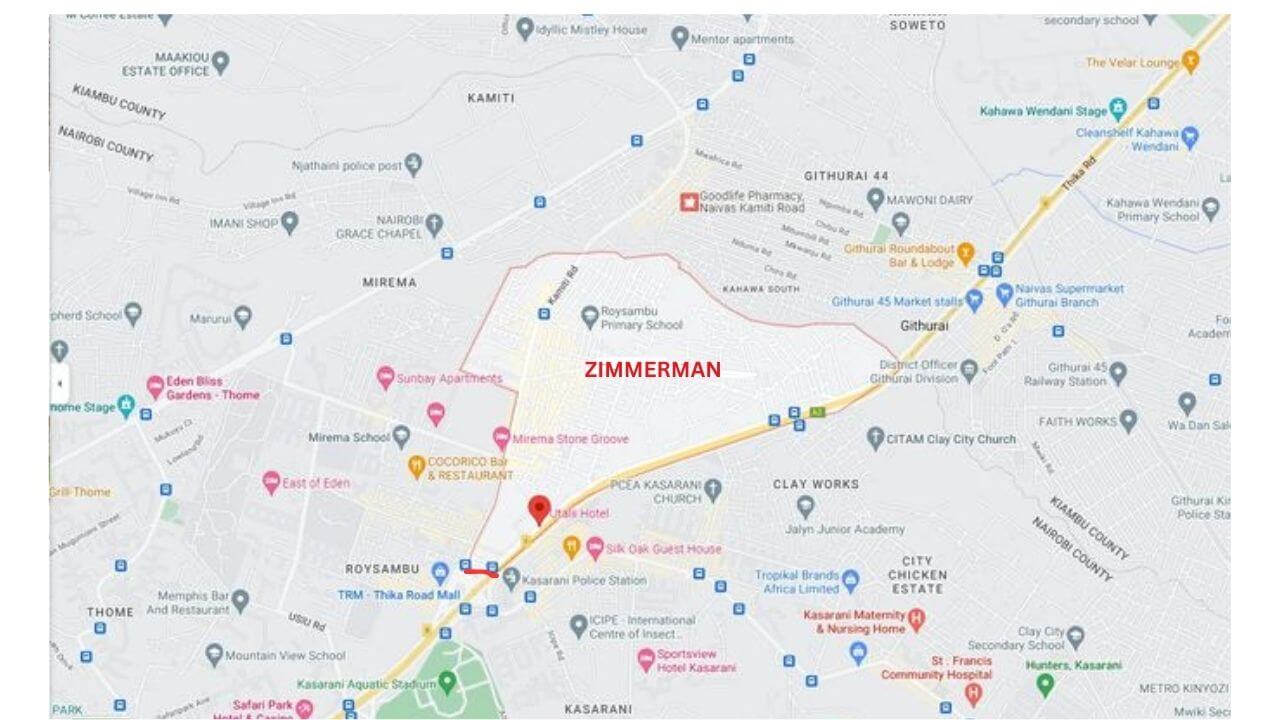
    Welcome to the vibrant neighborhood of Zimmerman, popularly known as Zimma. Zimmerman is a thriving suburb town in Nairobi county, Roysambu constituency, and is one of the 5 wards in this constituency. It’s located approximately 13 kilometers northeast of Nairobi’s central business district, off the Thika superhighway.

    Map of Zimmerman Neighborhood

    A brief history of Zimmerman.

    Zimmerman has a rich history that dates back to the days of a German industrialist who went by the name Karl Fritz Paul Zimmerman. This industrialist set up a taxidermy factory(Zimmerman Ltd) in the area since poaching was legal in Kenya then. The factory was the second largest of its kind in the world. It ran its operations in Kenya for 33 years up until 1977 when poaching was banned by the government of Kenya and the factory was given months to cease all operations. After the company was closed the land was sold but the area continued to carry the name Zimmerman.

    https://youtube.com/watch?v=18_C9xVumow%3Fstart%3D14

    Transport to Zimmerman from Nairobi.

    Traveling to Zimmerman from Nairobi by public means is relatively easy and affordable. Most matatus that run along Thika Road pass through Zimmerman but for the best experience consider boarding a matatu at Bus station, Nairobi City Center. The matatu will drop you at cooperative stage in Zimmerman, unlike others which will mostly drop you close to the superhighway.

    The fare ranges from Ksh50 to Ksh70 but can hike up to Ksh100 depending on the time of the day.

    Places of worship in Zimmerman

    The neighborhood boasts a range of places of worship, some of the most notable ones include;

    Deliverance Church International Kasarani Zimmerman,

    ACK St. Andrews Zimmerman

    Redeemed Gospel Church

    PCEA Zimmerman Church

    Church of Jesus Christ Zimmerman

    Healthcare services in Zimmerman.

    There are several hospitals and medical centers in Zimmerman ensuring residents’ medical needs are well taken care of.

    Some of the notable ones are:-

    Penda Medical Centre,

    Kahawa West Family Medical Centre

    Index Medical Services

    Afyamax Medical & Dental Centre

    St. Teresa Medical Clinic

    Kamwitha Medical Center

    Zimma Health Care

    Zimmerman Medical Dispensary

    Schools in Zimmerman

    Learning institutions providing quality education to the community include;

    Vision Institute of Leadership Management

    Sheraton Catering College

    Elite Centre Zimmerman Primary School

    St. Anthony Academy

    Royhill Academy

    Judimma Academy Centre

    Njathaini Primary School

    Njathaini Primary School Special Unit

    Entertainment joints in Zimmerman

    Entertainment in Zimmerman is not in short supply, with various spots offering residents and visitors various fun activities and relaxation options.

    Some of these fun spots include;

    Mirema Gardens Amusement,

    Club Airport

    Beach View Club

    Canopy Club

    For nature lovers,

    The lush greenery of Karura Forest is just a short drive away, providing an escape from the hustle and bustle of city life.

    Rental houses in Zimmerman

    The neighborhood is also a great place to call home, with rent prices ranging from as low as Ksh3, 500 to Ksh35, 000, depending on the location of the house and size.

    Here is a breakdown of the house rent range to cater to different housing needs

    Single room      (Ksh3, 500- Ksh5, 000)

    Bedsitter           (Ksh6, 500 – Ksh10, 500)

    One Bedroom   (Ksh9, 000 – Ksh15, 500)

    Two Bedroom  (Ksh14, 000- Ksh22, 000)

    3 Bedroom        (Ksh21, 000- Ksh35, 000)

    Advantages of living in Zimmerman

    Living in Zimmerman has several advantages, including:

    1.   Strategically Located.

    Zimmerman is located just 13 kilometers northeast of Nairobi’s CBD. This makes it an ideal residential area for those working close to the city or in the city center.

    2.   Diversity.

    People from different parts of the country and outside the country have over the years moved to Zimmerman. Here you will interact with people from different backgrounds, learn new things, and try out new experiences.

    3.   Availability of essential amenities.

    Zimmerman has a variety of amenities, including hospitals, learning institutions, places of worship, and entertainment joints, making it a self-sufficient neighborhood that offers convenience to its residents.

    4.   Affordable rent.

    The rent prices in Zimmerman are relatively affordable compared to other neighborhoods in Nairobi, making it an ideal place for young professionals and families on a budget.

    5.   Business opportunities.

    Zimmerman is an ideal place to start and grow a business, as there is a huge population providing a ready market.

    Disadvantages of living in Zimmerman

    As with any area, there are also some potential downsides to consider.

    Here are a few.

    1)  Traffic congestion.

    During rush hours Thika Road does sometimes experience heavy traffic that can make commuting or running errands more challenging to those living in Zimmerman.

    2)  Noise pollution.

    The vibrant energy of Zimmerman can also mean that there is more noise than in some other areas. This can include everything from the sounds of street vendors to the hum of traffic.

    3)  Crime.

    While Zimmerman is generally considered a safe neighborhood, like any area it can be subject to crime. Residents should take precautions to keep themselves and their belongings secure.

    4)  Limited housing options.

    While Zimmerman offers a range of housing options, it may be more challenging to find affordable or high-quality housing in some areas. This can be a challenge for those looking to move to the neighborhood.

    Conclusion.

    As you can see above Zimmerman is a town that welcomes everyone. Here you can discover new experiences, new business ideas, and it is a perfect place for those starting up a family.

    If you are interested in living in Zimmerman, we encourage you to explore the various property options available on our website. Likewise, if you have a plot of land or a flat you would like to sell, we invite you to list it for free on our website. We offer a convenient and easy-to-use platform for connecting potential buyers and sellers. Thank you for taking the time to learn more about Zimmerman, and we look forward to helping you find your dream property in this vibrant and exciting neighborhood and in Kenya as a general.

  • How Much Land Do You Need To Build

    How Much Land Do You Need To Build

    Some people prefer building to buying a property in Kenya. While others prefer to buy an already completed house to save on settlement time. If you prefer building your home or income property, consider acquiring land enough to fit your property.This blog will show you the size of land you should have before you start building your home or income property in Kenya. Property254 primarily aims to educate you about real estate investment and buying homes in Kenya. We also have listings of land for sale you can buy in Kenya. 

    How Much Land Do You Need To Build Income Property

    A good land-to-building ratio is usually above 2:1. This means that the land size should be at least two times the size of the apartment. Equally, an acre of land will be enough to build an income property unless you want to invest in big projects. An acre of land is equivalent to 4046.86 sq. metres. 

    However, most income property investors buy parcels of land in terms of plots. For instance, you can buy a plot measuring 50 feet by 100 feet, which will be enough to build one storey building.

    An income property is an investment that aims to bring in money for the investor. Income properties are residential, commercial, or industrial properties.  When investing in income property in Kenya, it’s essential to know the size of land you need to build your property. 

    The land size depends on the type of income property you will build. For instance, an industrial estate will require a larger land due to the activities associated with the premises. On the other hand, a residential property may take less land, especially with storey buildings.

    Furthermore, a commercial building can also take up less space, especially if it’s storey.
    However, before you build any income property in Kenya, you should get a licence from the National Construction Authority(NCA).  

    https://youtube.com/watch?v=ka7-DlUTamQ

    How Much Land Do You Need To Build a Home

    When building a personal residential home, consider getting a larger piece of land where you will have enough space. A more recommended land-to-building ratio for a home is 4:1. This ratio implies that the land will be four times the size of the land. 

    A big land at home is an excellent way to expand it in other profitable means. For instance, if you have a big home compound, you can rear chickens, do dairy farming, and have a small kitchen garden to help you save money for groceries.

    An acre of land is slightly above half of a football pitch. Therefore, an acre of land is enough to build a home and still manage to do other activities in the compound.

    However, you should hire a professional architect to plan your land and ensure you don’t misuse it. An architect can help you save your one-acre land and enable it to fit other buildings like cowsheds, chicken houses, etc.

    Conclusion

    The land you need to build a property depends on the uses of the property. Therefore, it’s essential to understand what you want to do with your property before planning to build. 

    In addition, ensure you work with an architect to help you plan your land accordingly. And remember to use modern tools like 3D models to utilise your space to the maximum. 

    Finally, don’t forget to peruse our land listings so you can buy and build your income property or your home.

    How Much Land Do You Need To Build: Frequently Asked Questions

    What does 1 acre mean?

    An acre of land equals 4046.86 sq. metres or 43560 sq. feet.

    How many plots of 50 by 100 feet are in one acre of land?

    A 50 by 100 feet plot equals an eighth of an acre. Therefore, one acre has 8 plots of 50 by 100 feet. 

  • How to Apply for Transfer of Interest in Land on Ardhisasa

    How to Apply for Transfer of Interest in Land on Ardhisasa

    What is the Transfer of Interest in Land?

    The transfer of interest in land refers to the passing of land ownership from one party to another. This process is applicable for sole proprietors, joint tenancy, or tenancy in common. It requires the involvement of a practicing advocate and registration of all parties involved on the platform.

    Read :How to create and individual account on ardhisasa

    To begin the process, the proprietor must have their property listed under the “My Property” section on the platform. The advocate initiating the transfer must have a current practicing certificate and an upgraded account from a public user to an advocate. Transfer of interest in land is under the land registration services.

    1.      Click on Quick links or view more options.

    2.      Click on transfer services, then transfer of interest in land. The application is based on Form 33 of the Land Registration Act 2012. The applications are categorized as;

    a)      pending- these are applications that require action or the action of the parties included in the transaction. The actions may range from and not limited to otp verification, execution, surrender of the title document, or payment of pending invoices.

    b)      Ongoing- these are applications that you are involved in but do not require your action this allows you to keep track of the progress of your application.

    c)      Completed- these are applications that have been worked on by the ministry and have been approved.

    d)      Rejected- these are applications that have been worked on by the ministry but have been rejected for one reason or another.

    e)      cancelled- these are applications that have either been cancelled by the parties involved or the registrar.

    3.      To start a new application, click on the “New Application” button. Before proceeding, read through the frequently asked questions for guidance on the process requirements.

    4.      Enter the necessary information provided by the client, including the parcel number listed on the title document. If the transferor is an individual or a company, search for their details using their additional ID. Verify the information provided.

    5.      Select the transferee and the holding type, which can be sole ownership, joint proprietorship, or tenancy in common. Provide the transferee’s details using their ID. Ensure all co-owners are included for tenancy in common to avoid rejection.

    6.      Specify the nature of interest to be transferred, such as leasehold or freehold. Enter the consideration amount (selling price) and add a pickup person who will collect the title document upon completion.

    7.      Enter the details of the attorney representing the transferor and transferee, including their ID and additional ID. For tenancy in common, define the shares of each buyer to ensure the total adds up to 100%.

    8.      In this section, the nature of interest to be transferred, such as leasehold or freehold, is specified. The consideration amount, which is the agreed selling price, is entered. A pickup person, registered on the platform, is assigned to collect the title document upon completion.

    9.      The advocate provides the details of their law firm, including the name, contact information, address, and website if applicable. If there are any additional provisions to be included in the transfer, they can be added in this section.

    10.  The applicant selects the land status (developed or undeveloped) and the category of valuer required for property valuation purposes. The option to apply for an exemption from stamp duty is also available, with additional information required if selecting “Other Section” or “Legal Notice.”

    11.  Upload relevant documents, such as the application for adjudication of stamp duty, and any additional agreements.

    12.  Before submitting the application, all entered information should be reviewed for accuracy. Upon submission, the advocate must append their signature using one of the provided signing options.

    13.  Both the transferor and transferee receive notifications and must verify the application using OTP codes sent to them. They have the option to change or add an advocate to represent them. Each party appends their signature to confirm their involvement.

    14.  Upon submission, the advocate must upload a scanned copy of the client’s title document and schedule a date to submit the original physical copy to the Ministry of Lands. A gate pass is issued for access to the premises.

    15.  The application proceeds for stamp duty determination, and once the amount is derived, the applicant is notified to make the payment. Failure to pay on time results in monthly penalties.

    Upon payment and submission, the application undergoes further processing. Applicants can track the progress on the application details page. Successful approval results in an invitation for the pickup person to collect the title document, while rejections are accompanied by reasons for the decision.

    For enquiries, please visit Ardhi House, Off Ngong Rd: P.O. Box 30450-00100, Nairobi, Kenya or email: [email protected]. The ministry can also be reached on phone:0746 962239.

  • Syokimau Neighborhood Guide : All You Need to Know

    Syokimau Neighborhood Guide : All You Need to Know

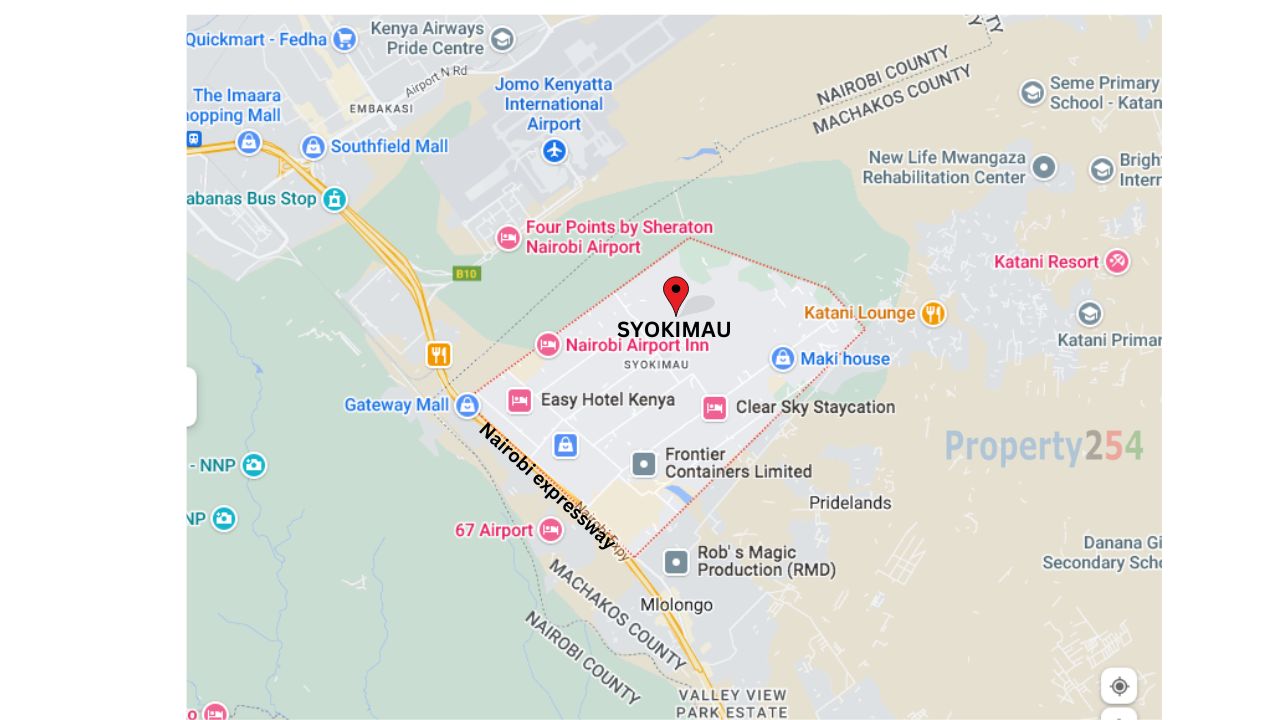
    Syokimau is a satellite town in Syokimau/Mlolongo ward, Mavoko constituency in Machakos County. It is located approximately 18 kilometers South of Nairobi CBD.

    A Brief History of Syokimau

    History has it that Syokimau was named by Syonguu a Kamba prophetess after another Kamba prophetess who lived in the 1800s.

    Syokimau was a respected Kamba medicine woman who prophesied the coming of people of different colors to Kenya. She prophesied that these people would come carrying fire in their pockets and said she saw a long snake with its head in the ocean and tail in the lake.

    Her prophesies came to pass in the 20th century as it was understood that carrying fire in their pockets was actually carrying match boxes and guns, the people of different colors were the whites and the long snake was the railway line that was built from Mombasa to Lake Victoria.

    Syokimau area is now a town, that has carried her name to date.

    Map of Syokimau neighborhood

    Transport to Syokimau from Nairobi

    Syokimau is served by a good rail and road network.

    The construction of the new Nairobi expressway has eased transport to Nairobi and other parts of the country from Syokimau. However, most residents still use Mombasa Road which costs them between Ksh50 to Ksh100 to Nairobi CBD depending on the time of the day.

    Syokimau is also the Nairobi terminus railway station. Therefore passengers from Mombasa using the standard gauge railway can swiftly transfer to meter gauge trains to get to Nairobi CBD.

    Currently, there are two trains that carry passengers to Nairobi in the morning and two in the evening charging Ksh40 only.

    Places of worship in Syokimau

    PCEA Syokimau

    Destiny Life Church

    St. Marys ACK Church

    Syokimau Central SDA

    St. Veronica Catholic Church Cathedral Syokimau

    House of Grace Syokimau

    Nairobi Chapel Syokimau

    Destiny Life Church

    AIC Syokimau Church

    Healthcare services close to/in Syokimau.

    RFH Healthcare

    Katani Hospital

    Baspen Syokimau Cottage Hospital

    AAR Healthcare Services

    Mayaan Medical centre

    Equity Afia Syokimau

    Syokimau Medical Centre

    Getrudes Children Hospital

    Fitness center/ gyms in Syokimau

    Next level Fitness Gym- 0740 140 130

    Switch Fitness Centre- 0729 573 656

    Bliss park Gym- 0733 999 910

    Thabiti Gym and Fitness Centre

    Rolex Gym and Health Club

    Beauty/SPA Parlour in Syokimau

    Rubys Spa & Nail Parlour

    Lush Spa

    Fusion Spa Kenya

    Bliss Park Spa

    Education institutions in Syokimau

    Epren College of Professional Studies

    St. Nicholas College of Professional Studies

    Brighton International School

    Zuwena International School

    The Daniel School

    Top performance Academy

    Gracebrook Academy

    Syokimau Kindergarten

    Ice Montessori School

    Entertainment joints in Syokimau

    The Tunnel

    Level seven Lounge- Next Gen Mall

    Crystal Bar

    Lounge 254- Gatewaymall

    Governors Club

    Shooters Club

    Rental houses in Syokimau

    Single rooms          Ksh4, 000 to Ksh6, 500,

    Bedsitters               Ksh6, 500 to Ksh9, 500

    One-bedroom        Ksh12, 000 to Ksh17, 000.

    Two bedroom        Ksh15, 000 to Ksh30, 000

    Three bedroom     Ksh35, 000 to Ksh65, 000

    Internet providers In Syokimau

    Syokinet-     020 7650317

    Fastnet Air Fiber– 0729 008434

    Jamii Telecommunication Ltd– 0747585100

    Sigmanet wireless

    Advantages of living in Syokimau

    Affordable housing options

    Whether you are looking to rent or buy a property, Syokimau offers a range of housing options at an affordable price compared to central parts of Nairobi.

    Proximity to Nairobi

    The close proximity of Nairobi CBD from Syokimau is advantageous to residents as one can access all benefits of living in the city with ease.

    Growing real estate market

    Over the years Syokimau has attracted real estate developers and investors. This has translated into increased property values. This also offers an opportunity for potential appreciation in property value.

    Good transport network

    Syokimau is served by a good rail and road network to Nairobi CBD and other parts of the country. The construction of the Nairobi expressway has enhanced connectivity to the city making commuting faster and more convenient.

    Disadvantages of living in Syokimau

    Insecurity in some areas

    Most parts of Syokimau are secure as residents have a group to address such concerns. There are also many police patrols within Syokimau, and many gated estates have employed guards offering round-the-clock security. However, some interior parts of Syokimau often face security problems.

    Developing infrastructure

    Most parts of Syokimau are still growing which can cause occasional inconveniences such as road repairs, construction activities, or irregular access to utilities, which can disrupt daily routines.

    Conclusion.

    Syokimau offers an excellent investment opportunity in the real estate market. It is also a good place to live for students, individuals, and families who want to live in an affordable yet serene environment close to the city.

    If you are looking for properties for sale in Syokimau, we invite you to explore the options listed on our website made by some of the most trusted sellers we have in the country. You can also list a property you are selling on our website in Syokimau to get clients faster. Thanks for reading.

    https://youtube.com/watch?v=Ee0oeHQ9uaQ
  • Change of User Application Process on Ardhisasa

    Change of User Application Process on Ardhisasa

    Land user or land use is a series of operations on land carried out by humans with the intention to obtain products and or benefits through using resources on said land. For instance, a residential user, a commercial user, an industrial user or an agricultural user. A change of user is therefore an application to change the initial or existing user to a proposed new user one which must be harmonious with the surrounding neighborhood and according to the plan within the area as directed by the planning authority. This particular application can be initiated by the proprietor or a registered fiscal planner

    Change of User application process.

    1.      Log in to https://ardhisasa.lands.go.ke/account/login using your Ardhisasa ID or national ID number, along with your password. Once logged in, you will receive a one-time password (OTP) code on your registered phone number. Enter this code on the OTP prompt box and click Log In. You will then be directed to the dashboard.

    2.      Click on the Land Administration section, followed by View More. In the expanded options, click on Development Control to access the application services provided in this department. Within the application section, you will find five tabs: pending, ongoing, completed, cancelled, and rejected. These tabs organize the applications based on their current status. The pending tab displays applications that require further action, while the ongoing tab includes applications submitted for processing by the ministry officials. The completed tab lists applications that have been approved, the cancelled tab represents applications that have been terminated, and the rejected tab displays applications that did not meet the necessary requirements.

    Read: How to Add Property on Ardhisasa

    3.      Click on the New Application tab located at the top right corner of the page. Before proceeding, you can explore the frequently asked questions (FAQs) section to gain additional knowledge about the process. Once you are ready, click Next to proceed to the application details section.

    4.      Select the Change of Use application, as it is the default option. Choose the new use you intend to change your land to, and describe the current status of the land.

    5.      Enter the current parcel number in the specified format, and provide the reference number from the PLUPA/DC17 (previously PPA2) form issued by the county for the development control process. If you have any additional relevant information, you can enter it in the provided text box. Make sure to complete all the required fields marked with an asterisk (*).

    6.      Upload the necessary documents for processing your application. It is recommended to have all the required documents saved in one folder on your machine for easy upload. If you have any additional documents that may be relevant, you can include them by clicking on Additional Documents, entering the document name, and uploading the file. Once you have attached all the required files, click Next to proceed.

    Also read: How to Conduct Land Search on Ardhisasa

    7.      Scroll through the entire page and ensure that the captured details are correct. If satisfied, click Submit to submit your application. You will be prompted to confirm your submission, and upon confirmation, a pop-up notification will confirm the successful creation of your application. Click Close to exit the notification.

    Once you submit your application, you will receive a reference number and can track the progress of your application. The application status will be shown as ongoing and will include details such as verification by the property owner. If you wish to cancel the application, you have the option to do so. As the proprietor, you will need to verify the application by entering the OTP code sent to your phone number and email address. After successful verification, you can click the submit request button to proceed. A pop-up notification will confirm the submission, and you can find your application in the ongoing tab. By clicking on view, you can monitor the progress of your application through the progress bar. Ministry officials will process the application, and you will be notified when it reaches the final approval stage.

    For enquiries, contact us on 0746 962239 or email [email protected] or visit Ardhi House, Off Ngong Rd: P.O. Box 30450-00100, Nairobi, Kenya.

    In case of more information, keep visiting our website https://property254.co.ke/ or call us on 0726982982 or on email through [email protected].

     Related Articles

    1.      How to Pay Land Rent on Ardhisasa

    2.      How to Apply for Transfer of Interest in Land on Ardhisasa

  • 10 Things You Need to Know Before Buying Land in Kenya

    10 Things You Need to Know Before Buying Land in Kenya

    Buying land is one of the biggest financial decisions you will make in life, but it also has its challenges. The Mavoko and Kirima Land Saga taught us valuable lessons that every person thinking about buying land should know. In this article, we’ll go through the ten essential things you need to know before you start buying land in Kenya.

    1.     Do a Land/site visit of the Land

    When buying land in Kenya, prospective buyers often overlook the crucial step of conducting a thorough on-site inspection. One common mistake is relying solely on online listings or second-hand information, leading to misconceptions about the actual condition and suitability of the land. To avoid this pitfall, it is important for buyers to personally visit the land they intend to buy.

    Imagine a friend who fell for glossy online photos but faced a different reality when they finally visited. The gentle slope promised turned into a steep hill, a surprising twist that could’ve been avoided. Skipping this step may lead to unexpected bumps in the road, turning your dream investment into a headache. So, grab your hat and visit that land before sealing the deal!

    2.     Conduct due diligence

    Don’t forget to do your homework when buying land in Kenya. Researching and getting advice is like having a magic ball that shows potential problems. Imagine a friend who didn’t do this and faced unexpected issues with the land they bought. By doing your homework, you make sure the land matches your dreams. Talk to locals and ask experts. It’s like a safety net for your investment. So, before you make it official, gather information  because a bit of research can make your journey to owning land easy and satisfying.

    3.     Conduct an Official search of the Land at the Land registry

    Many people miss out on this important step, and it can lead to unexpected problems. Checking if the seller is the real owner of the land is crucial for a hassle-free deal. The great thing, it doesn’t cost anything. Just bring the original title deed, and copies of the seller’s pin and ID. In only two days, you can find any issues and make smart choices. Don’t take risks with your dream land. A fast trip to the Land Registry protects your investment and ensures a safe path to owning your property.

    Read:  How to Conduct Land Search on Ardhisasa.

    4.     Da company /organization search selling the land

    Imagine a neighbour rushing to buy land, only to realize they knew nothing about the company selling it. Avoid this mistake! Before diving into a land deal, it’s like checking reviews before picking a restaurant do your homework on the selling company. Ensure they’re legit and trustworthy. Our fictional friend learned the hard way, discovering hidden fees and legal hiccups. Take a moment to Google, ask around, and make sure the company is as solid as the ground you want to own. A quick search can save you from a plot twist you never bargained for.

    5.     Never Purchase a land without original title deed

    Ever heard the tale of a buyer so eager to own a slice of Kenya that they forgot the golden rule? Picture this: a friend excitedly securing land without a title deed, thinking it’s just paperwork. Cue the plot twist  without that original title deed, it’s like buying a book without a cover. Never skip the title deed step. It’s your proof of land ownership, a tale of legitimacy. Ensure that original title deed is firmly in your hands before celebrating your land conquest in Kenya; it’s the happy ending you’ll thank yourself for.

    Read: Types of Title Deeds In Kenya and How to Obtain Them

    6.     Confirm any unpaid land rent/rates

    Before sealing the deal on your dream land in Kenya, ensure you confirm any outstanding land rent or rates. Overlooking this detail might lead to unexpected financial burdens. Imagine the surprise of discovering overdue payments after the purchase! Take a moment to check with the local authorities or land office to verify the property’s financial standing. It’s a crucial step to avoid post-purchase headaches and ensures a smooth transition into land ownership. Remember, a small effort to confirm unpaid land rent or rates upfront can save you from a significant hassle down the line, allowing you to enjoy your new property stress-free.

    Read: How to Pay Land Rent on Ardhisasa

    7.     Involve the right professionals 

    To safeguard against scams when purchasing land, it’s important to involve professionals throughout the process. Engaging the following experts ensures a secure transaction:

             Lawyer: They play a crucial role in drafting the agreement between the buyer and seller. Both parties can share one advocate to minimize costs.

    ·         Valuer: Necessary for valuing the land, determining stamp duty, and ensuring a fair transaction.

    ·         Surveyor: Conducts ground verification and assists in processing essential land maps.

    Read:  Who Should Be Involved in Your Land Transaction in Kenya?

    8.     Always have a sale agreement and proof of payments

    When buying land in Kenya, protecting yourself is a must. Make sure to get a sale agreement and keep proof of your payments. It’s like having a map when sailing unknown seas crucial for a safe journey. The sale agreement and payment records act as your legal support, stopping arguments and making everything clear. Don’t let the excitement of getting land make you forget about these protections. They ensure your land purchase is safe and straightforward. With a sale agreement and payment proof, you’re not just buying land you’re ensuring a worry-free investment in peace of mind.

    9.     Don’t hurry the Land Buying Process

    When buying land in Kenya, it’s a mistake to rush through the process. Hurrying can make you miss important details like property boundaries or legal checks. Slow down; buying land is like a careful dance, and each step is important. Take time to check documents, inspect the land, and make sure it fits your plans. Being patient is worth it  avoid the problems of rushing, and enjoy the satisfaction of making a well-thought-out and safe land purchase. Taking your time ensures your dreams are built on a strong foundation.

    10. Developing a property is not grounds of being saved from evictions

    People from both the Mavoko and Kirima land sagas really believed that because they had constructed properties, they could not be evicted. Please keep in mind that, when determining ownership of any property, the fact that it has been developed is not even among the top five considerations considered by the court. Its very important to have an original title deed before doing any developments on any property.

    Don’t be conned!https://www.youtube.com/embed/sPIHfKZ58JI

    Here is the Process of buying Land in kenya

    https://www.youtube.com/embed/sPIHfKZ58JI