In a previous article, we discussed the commissions that real estate agents can charge. In Kenya, the Estates Agents Act sets scales from Scale 1 to 5 that sets the commissions to be paid. The rates vary depending on the services rendered.
The above article sets rates for selling properties, letting, management and mortgages. But what fees should be payable to a real estate agent when they successfully bring parties together for a joint venture?
In most cases, the real estate agent who helped find either the land or the capital partner in a joint venture does not become a partner in the venture. The real estate agent needs to be compensated by receiving a commission. This is because had they not been there, the joint venture would not exist.
A few months ago, we were approached by a firm that needed 100 acres around Ruiru for a joint venture. After we introduced them to the landowner, the negotiations started and an agreement was reached.
While the meetings between the two parties went on, we reached out to the landowner for a commission. With the value of the land well over a billion, we were waiting for a hefty commission.
Long story short, we got way less of a commission than the usual 3% fee. We were not happy but had to accept the amount.
In hindsight, we should have prevented the situation. A good way would have been to have the landowner commit to paying an acceptable fee in writing, before being introduced to the property owner.
The agent’s remuneration act does not have a clear percentage for commissions to be charged for negotiating a joint venture. It however leaves room for negotiation between parties.
In practice, there are no generally accepted commission rates for joint ventures. There is also uncertainty in valuing the real worth of the joint venture. Is it the value of the land? Is it the value of the joint venture? Should the real estate be paid on the value of the venture even if they are not a party?
We subscribe to the school of thought that puts real estate agent fees as per the sales and purchase schedule for the value of the land. This way, they get a commission in the same way as if they had organized a successful sale or purchase of land.
As joint ventures take time, this commission can be paid at once when the joint venture agreement is signed. It is also acceptable to be paid in installments as the joint venture progresses.
Remember, you need to register with the Estate Agents Registration Board (EARB) to practice as a real estate agent in Kenya. Only EARB registered and licensed Estate Agents with a current practicing annual certificate can conduct Estate Agency. To learn more here is an article we wrote.
Private mortgage insurance, or PMI, is a type of insurance that protects lenders from losing money if you default on your home loan. PMI is required if you have a conventional loan and make a down payment of less than 20 percent. You can pay a PMI either monthly or in a lump sum.
If you default on your home loan, the lender will look to your private mortgage insurance policy to cover the loss. The lender will look to you for the balance if the policy pays out. Private mortgage insurance is a way to protect lenders, but it does not protect the homebuyer.
This post explains all you should know about PMI. Keep reading to learn if you should or should not sign up for a PMI.
You can pay PMI monthly or in a lump sum. If you choose to pay it in a lump sum, you usually do so at the time of closing. If you pay monthly, the insurance is added to your mortgage payment.
The size of your down payment, credit score, and loan type all play a role in how much PMI you pay. A conventional loan with a low down payment may require PMI, while a government-backed loan with a higher down payment may not.
When you have PMI, it protects your lender if you default on your loan. The insurer will then step in and pay off the remaining balance of your loan. This protects the lender but does not relieve you of your obligation to repay the loan.
Once you have built up enough equity in your home, you can cancel PMI. This typically occurs when you have reached 80 percent or less loan-to-value ratio.
Types of Private Mortgage Insurance
There are two types of PMI:
Borrower-paid
With borrower-paid PMI, you pay a monthly premium (usually along with your mortgage payment). The premium is typically 0.5% to 1% of the loan amount. So, on a Ksh.2000,000 loan, you’d pay Ksh.10,000 to Ksh.20,000 a year in premiums.
Lender-paid
With lender-paid PMI, the lender covers the premium but charges you a higher interest rate. The premium is built into your interest rate, so you don’t have a separate monthly bill.
Both types of PMI stop covering the lender when your loan reaches 78% of the home’s value or the date you get 22% equity, whichever comes first. At that point, you can ask the lender to cancel PMI.
How Can I Get Rid of PMI?
Most people with private mortgage insurance do eventually cancel it. But there are a few things you need to know about the process.
If you have a conventional loan, you can request that the lender cancel PMI once you have reached 20% equity in your home. You can also refinance your home to get rid of PMI.
If you are struggling to make your mortgage payments and are at risk of defaulting on your loan, you can negotiate with your lender to have them cancel PMI. This is typically only an option if you are currently on your loan payments but face financial hardship.
You can also choose to pay off your mortgage early, which will automatically cancel PMI. However, this may not be the best option if you struggle to make your mortgage payments.
How PMI Protects the Lender
PMI protects the lender by reimbursing them if you default on your loan. This means that if you stop making payments on your mortgage, the lender will still get paid. This protects them from losses they would otherwise incur if a borrower defaults on the mortgage loan.
PMI also allows borrowers to get a mortgage with a smaller down payment. This is because the lender knows they will be protected if the borrower defaults. This can be a great option for borrowers who may not have the ability to make a large down payment.
The Cost of Private Mortgage Insurance
When you take out a mortgage, you may be required to purchase private mortgage insurance (PMI). This insurance protects the lender if you default on your loan. The cost of PMI varies but is typically a few hundred dollars per year.
The Bottom Line
Overall, PMI is a way to protect lenders from losses that they may incur if a borrower defaults on their loan. It also allows borrowers to get a mortgage with a smaller down payment.
Whether you have a 15-year or a 30-year mortgage, private mortgage insurance is good to help you protect your credit score.
Frequently Asked Questions
Who is protected by Private mortgage insurance?
The lender is the one who is protected by a PMI when the borrower doesn’t pay their loan. In this case, the lender does not repossess the borrower’s house.
Is PMI paid monthly?
You can pay in lump sum or pay your PMI on monthly premiums. However, paying monthly premiums is simpler if you are already struggling financially.
Is PMI refundable?
If you cancel the PMI, the lender has up to 45 days to refund your money. However, when you sell the house, you don’t get your PMI back.
We covered the different ways in which land is categorized in Kenya from Agricultural, industrial, residential to commercial in another blog. In case you missed it, the blog is available on Categories of Real Estate in Kenya
Whether you are seeking to change or convert use of land from agricultural land to commercial land or changing land use from residential to commercial this guide will help you understand the process of applying for a change of user in Kenya.
4. Professional Fee (Depends on the size of the project and the area the property is located)
The power to control land use and development in Kenya is vested in the County Governments. The owner or the legal entity of any property, who intends to develop his/her land for any purpose other than that earmarked in the approved Master Plan, will make an application, along with relevant documents, to the respective County Governments’ Department of Physical Planning for consideration through a registered physical planner. Change of user from residential or single-dwelling to multi-dwelling involves the initial application and approval stage at the local authorities and the final approval and processing of the title at the Department of Lands.
It is advisable that prior to acquiring a piece of land, to know the user of the property especially for developers as the process itself can prove to be very expensive and time consuming. Most people buy agricultural property with the intention of developing it for real estate purposes without knowing its use, this can be very detrimental as one cannot be able to develop the property without a change of user approval.
Step1: Advertisement in Local dailies
Place an advertisement in at least two (2) local dailies of wide circulation giving fourteen (14) days’ notice of the intended change of user and inviting comments and/or objections, if any. Upon expiry of the notice period and subject to no adverse comments/objections, you can then submit the application at the local authorities.
Step 2: Application to Local Authorities
Prepare a planning brief by the registered physical planner which is then submitted to the governing county government physical department for approval together with payment. Application is done using Form PPA1(in triplicate) duly signed by a registered physical planner. In the application, include such plans and particulars as are necessary to indicate the purposes of the development, and in particular the proposed use and density, and the land which the applicant intends to surrender either for purposes of access or public purposes connected to the development.
The local authority to which a development application has been made is required within 30 days of receipt of the application to refer the same to the Director of Physical Planning for his comments. In addition, referral may be made to the other related government offices for comment including the Commissioner of Lands, Chief Engineer (Roads), Chief Public Health Officer and the Director of Agriculture. In considering such an application, a number of factors are considered such as a physical development of the area, the land reference and title, where applicable, defined location and size of the land, current user of the land, proposed/intended user, area zoning regulations and whether due notification has been made for the proposed development.
The local authority upon receiving comments of no objection from the said offices may issue its approval to the development application with or without conditions or may on the other hand refuse to grant its approval. The Physical Planning Act requires the local authority to communicate its decision in regard to a development application within thirty days to the applicant specifying the conditions pertaining to the approval or in the case of a refusal, the grounds for the same. The law also makes provisions for appeal incase an applicant is dissatisfied with any decision of the local authority.
Approval by the local authorities is in the prescribed form PPA 2. Upon obtaining the approval, a developer may commence construction within two (2) years from the date of the approval subject to obtaining a licence from the National Environmental Management Authority (NEMA). In considering whether or not to grant a licence, NEMA looks at both the conditions of approval by the local authorities i.e. form PPA2 and the proposed architectural designs.
Step 3: Application to the Lands Office
The Commissioner of Lands bears the onus to approve the change of user and set the pace for its effecting into the ownership documents. At the lands office, the Commissioner of Lands receives the application and the approval form -PPA2 in a correspondence file. The work is then assigned to a lands’ officer of the level of Chief Lands Officer, on behalf of the Commissioner.
From the Commissioner’s office is sent forth a circulation letter seeking comments from the Director of Survey and Director of Physical Planning. The comments from the two directors are then brought back to the Commissioner who then sends the Chief Lands Officer to the property. The officer compiles a Ground Report. With this, the property owner is then allowed to proceed with an Official Search to ensure every detail is in the file.
The file is then circulated vertically within the Commissioner of Lands hierarchy as follows: First, to the Chief Lands Officer, secondly, the Principal Lands Officer, thirdly the Assistant Commissioner of Lands. The file is then taken for a Technical Approval Committee (TAC) where issues pertaining to the land and its change of user are discussed and ratified. Minutes of the TAC are then circulated to the Deputy Director of Survey who forwards it to the Commissioner of Lands.
If there are no objections relating or incidental to the application, the file is then sent back to the Lands Officer who handled it who then drafts the approval letter (on behalf of the Commissioner of Lands) complete with new conditions and demands to be met. Among the conditions requested include need for new deed plans and new titles which will call for the property to be resurveyed. The Survey Act (Cap.299) provides for the modalities to survey private land. Validation and approval of the change of user by the Director of Surveys signifies the call for resurvey of the property in question. In this case, the property owner is counseled to seek services of a registered surveyor to draw new deed plans for the property, which are then approved by the Director of Survey who will then commission the confirmation, erection and/or re-erection of the beacons of the new property. The survey process has 8 stages that culminate to approval by the Director of Survey where also a new land reference number is issued for the property.
With the resurvey and deed plans complete, the applicant fills up an application form to apply for new titles from the Land Registrar. The applicant then surrenders the old title(s) and the new deed plan(s) to the Registrar who then files a deed file. The registrar then proceeds to process new title(s) for the property with the new user included and the new attendant conditions.
Conclusion:
The back-and-forth process of effecting a change of user is a long- winding and tedious process that requires much knowledge and patience. It is always important to engage professionals in this process. If you wish to obtain a change of user approval in Kenya, please do not hesitate to contact Steddy Trading Real Estate on 0722244971 or call us on 0726982982. Alternatively, you can write to us on [email protected]
A land search is a vital due diligence step if you are considering purchasing land in Kenya. In the past, several people have lost millions after being sold fake or stolen land parcels. Others have found themselves purchasing land that has pending issues, such as court cases.
Performing an online land search means checking the title deed of the parcel you are considering to verify its ownership. Once verified, you can proceed to make a transaction. You can also search your title deed to find out if you are the rightful owner of the land, you currently possess.
Below is a look at how to check a title deed online in Kenya through the Ardhisasa platform:
1) Go to the Ardhisasa website on your computer or smartphone.
2) Log into your account (or create one using the steps above and then log in).
3) On the Ardhisasa dashboard, select the Search Property option.
4) Enter the title deed number and other information requested on the online land search form.
5) Confirm that the information is correct, then submit the form.
6) Make the necessary payment and await verification. Once the payment goes through, you can print the results of the search.
The cost of land search.
The ministry of lands Kenya online search is a paid feature, which costs Ksh 500 per search. The money is payable through M-PESA, ATM card, or credit card. The payment platform is fully integrated into the Ardhisasa platform, with all the instructions on how to pay provided.
How to access a service that I need on Ardhisasa
To access a service on this platform, the user is required to navigate to the service tab that offers it i.e., the National Land Commission or the Ministry of Lands and Physical Planning. Under the options provided, the applicant can locate a service of interest. Each application contains additional FAQs for further guidance.
How are payments made on Ardhisasa? All payments are done on Ardhisasa. You do not have to log out to make payments to either the bank or the Ministry.
For enquiries, please visit Ardhi House, Off Ngong Rd: P.O. Box 30450-00100, Nairobi,Kenya or email: [email protected]. The ministry can also be reached on phone: 0743922876.
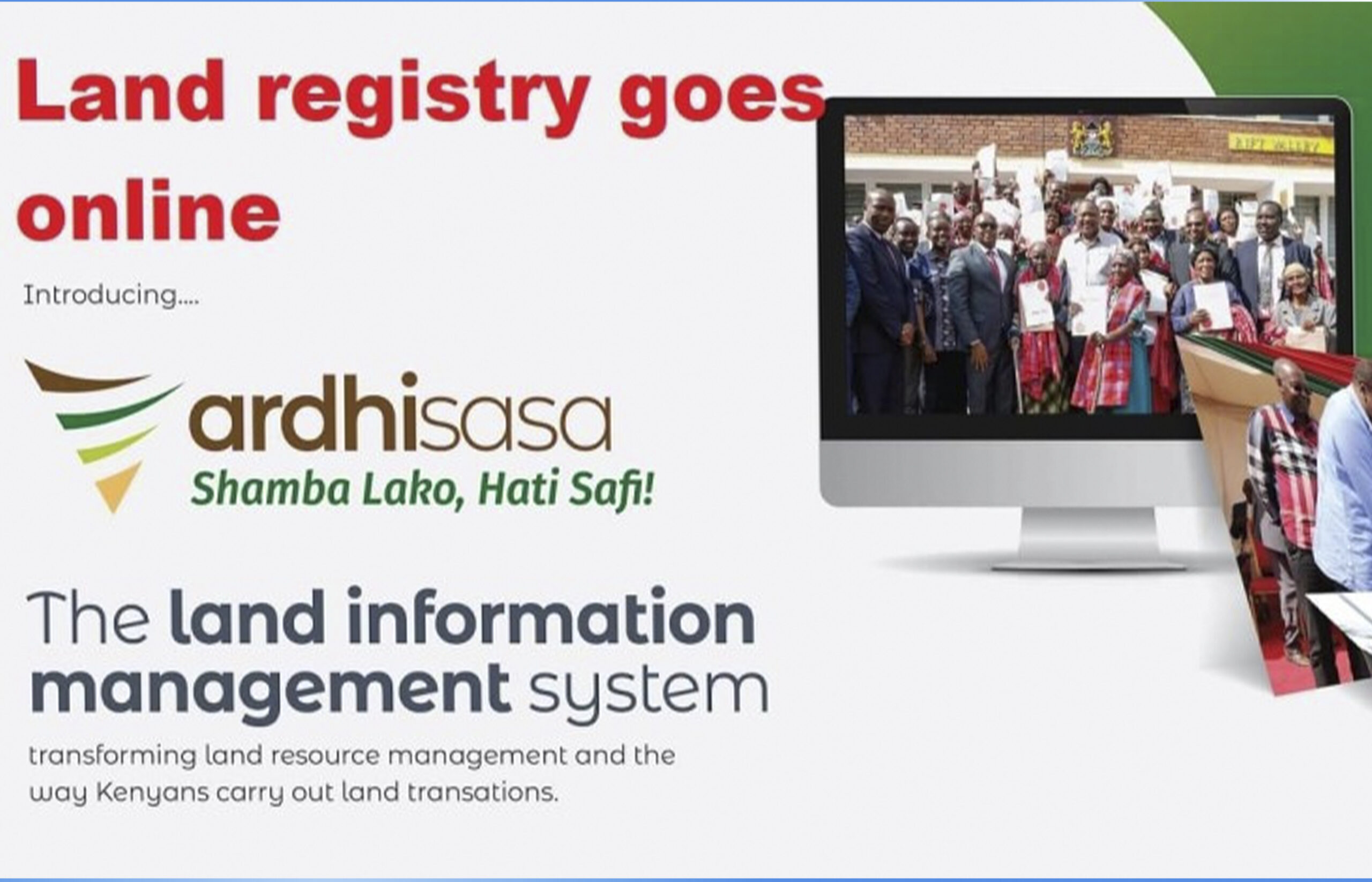
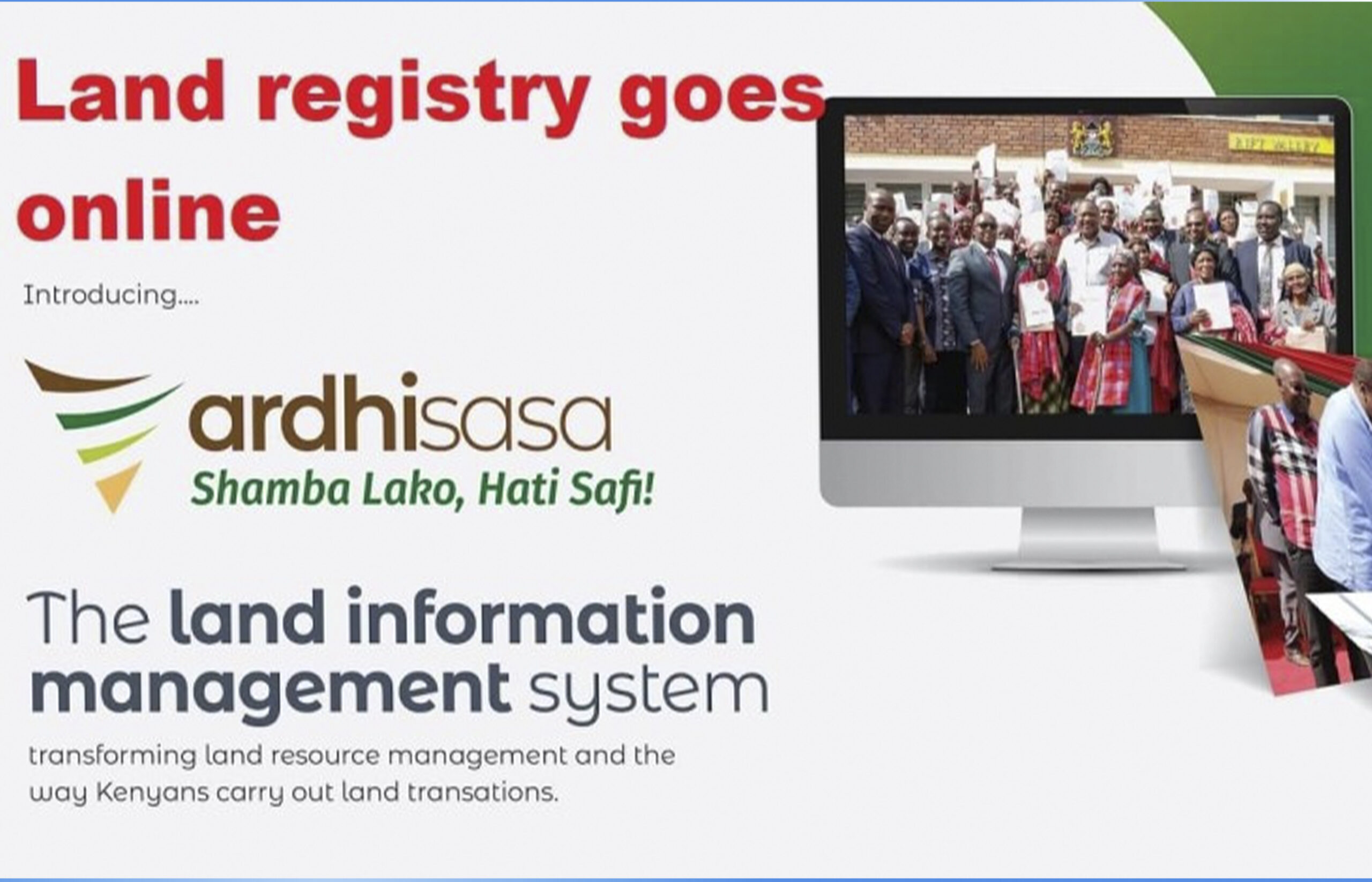
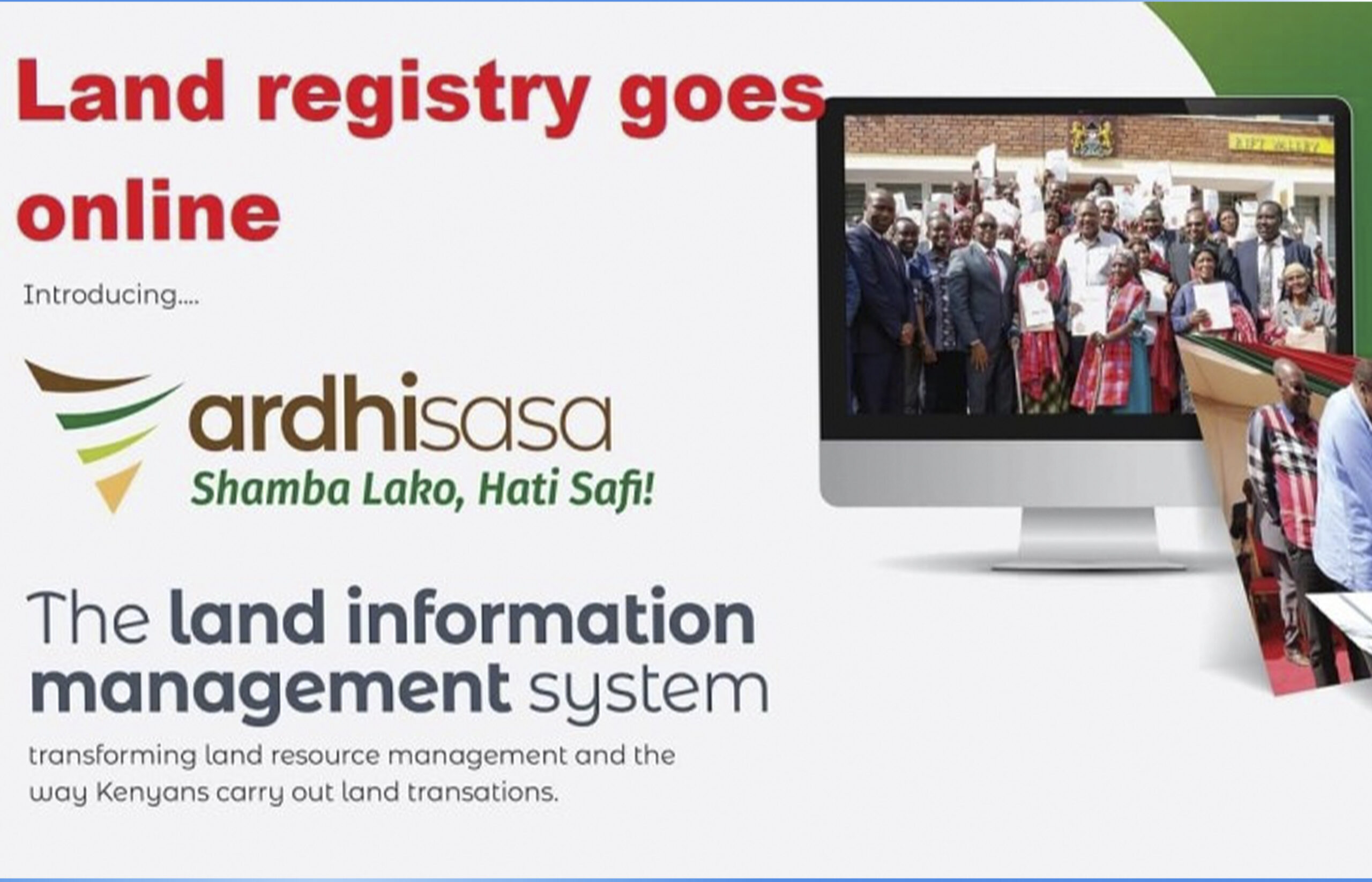
Ardhisasa is an online platform that allows Citizens, other stakeholders and interested parties to interact with land information held and processes undertaken by Government.
Land search is an application made to find out the ownership details of a property, and other interests that have been registered on that property.
1. Log into your account using your ID number and your password.
5. Under search details enter the parcel number and click add parcel. Ensure to use the correct title number or parcel number.
6. Enter the purpose for search.
7. Select scope of search which is either particulars of the subsisting entries in the register or particulars noted on the property section / proprietorship section / power of attorney register / registered documents register. Click next to proceed.
8. Confirm details and submit.
Please note that for you to get search results, the owner of the property has to be registered in the system, have the property in question details added under ‘my property’ section after which he/she must verify to authorize the system to generate search results.
For enquiries, please visit Ardhi House, Off Ngong Rd: P.O. Box 30450-00100, Nairobi,Kenya or email: [email protected]. The ministry can also be reached on phone: 0743922876.
The Lands Act and Registered Lands Act state that legal instruments such as leases, transfers, charges and mortgages will not be accepted unless they are duly stamped. During the process of buying and selling of real estate properties, one step involves the buyer or their advocate planning for the property to be assessed for stamp duty by a Valuer and subsequently stamping of transfer documents. Recent aamendment to the Stamp Duty Act includes provisions to allow the Collector of Stamp Duties to refer a valuation of property for Stamp Duty to a registered and practicing valuer and not necessarily a government valuer.
Stamp Duty on sale of Property in Kenya.
Stamp Duty is calculated on the property value or the purchase price agreed upon; whichever is higher. The rate varies by location of the property and is:
· 4% for land/property within a municipality
· 2% for agricultural land or property outside a municipality
· 1% if a property is registered as a company and transfer is by way of shares rather than title
For instance, an investor buying a Sh10 million house needs to part with Sh400,000 as stamp duty costs. Through the Tax Laws (Amendment) Bill, the government has amended the Stamp Duty Act to exempt individuals buying their first homes from paying stamp duty.
Stamp Duty on Property Leases
Stamp duty is levied on property leases at varying rates, depending on the lease duration. Stamp duty is levied at a flat rate of 1% on period leases up to 3 years, and at a flat rate of 2% on period leases exceeding 3 years. The highest figure used in cases of fluctuating rents. Hence, for an annual rent of Sh1 million, duty of Sh10,000 is paid.
Stamp duty on Mortgages in Kenya
Stamp duty charge for mortgages in Kenya is payable at the rate of 0.1% of the amount secured by any principal security document. Stamp duty is payable on supplemental security documents at the nominal rate of at Sh2 per every Sh1,000.
One can apply for stamp duty exemption in Kenya when:
· Transfer to held by family to a limited liability company wholly held by members of the same family.
· Transferring between associated companies.
· Transfer between spouses.
· Transfer in favour of any body established for charitable purposes.
How to pay stamp duty in Kenya:
All payments for land transactions attracting stamp duty shall be made to the State Department for Lands and Physical Planning through e-Citizen via paybill number 222222. Further payment instructions are available when clients click ‘PAY’ on the Ardhisasa platform.
M-PESA PAYMENT OPTIONS
Option 1
1. Click on the featured link on the invoice to receive an MPESA menu
2. Enter the MPESA pin and then click on OK
3. You will receive a confirmation SMS from M-PESA
Option 2
1. Go to M-PESA menu on your phone
2. Select Paybill option
3. Enter Business Number 222222
4. Enter the Account Number featured in the instructions
S. Enter the amount to be paid
6. Enter your M-PESA pin and Send
0746 962239/0794 067815 020 2717289
The Stamp Duty Act states that documents must be stamped within 30 days of acquisition or invite a penalty. For transactional instruments that are prepared locally, the tax should be paid within 30 days. However, for documents executed abroad and sent for registration locally, Stamp Duty must be paid within 30 days of receiving the documents. If, for whatever reason payments exceed the charged amounts, applications for refunds should be made within one year.
When Stamp Duty is not paid within that time frame, this results in the invalidity of the relevant transaction, any agreement signed between the parties becomes null and void, and the same is inadmissible in a Court of Law as evidence. Failure to pay the revenue also leads to a fine that is assessed at five percent (5%) of the principal assessed Stamp Duty for every quarter from the date of the instrument.
After payment of stamp duty, the real estate agent, conveyancing lawyer or the busier lodges the property for registration in favour of the buyer. After the registration process, the sellers advocate is legally permitted to release the full proceeds of the sale to the seller. Consequently, the buyer is officially handed over possession of the property and becomes the new legal owner.
If you are unfamiliar with the taxation process, we recommend you find a good tax advisory firm that can assist you with advice and assist you with completing needed transaction. We try to offer our clients the most comprehensive and dedicated service possible at no extra cost. Where we are unable to help, we then recommend that you instruct the services of another firm or advocate to receive appropriate legal advice and representation throughout the sales process.
Digitization of Land Records in Kenya.The concept of land digitalization registries in Kenya began with the aim of giving effect to sections 9 and 10 of the land registrations. Section 9 of the land registries mandates the registrar of land to maintain the register and any document required in a secure and reliable format.The government then began the process of digitalization of the land registry. The aim of the exercise was to bring efficiency and transparency to the land sector in Kenya. This marked the commencement of digitalization of 57 land registries which has been maintained since 1895.Recently, President Uhuru Kenyatta and CS Farida Karoney unveiled national land information and management systems. The system will allow Kenyans to carry out land transactions online. This was a commendable step towards full digitalization of the land records in Kenya. Some benefits of land digitalization of land records to landowners and land selling companies include.
Reduce time taken to process at the Land Registry.
The national land information platform that was created will help reduce the process of property registration. Additionally, it will also reduce the registration process of the land documents from 7days to 3days and this will be much beneficial to the land buyers. It will create good time management which can be done through texts and messages.
Enhances Investor Confidence
The system will enhance investor confidence in that it will be taking so little time and few days to register property. This will also protect the property owners and investors from fraudulent land transactions.
With the system around, a lot of stakeholders in the real estate sector will be attracted hence increasing the productivity rate in the industry.
Reduce costs
A digitalization program has the potential to reduce storage, management, and access costs. The storage costs can be reduced from the point digitalization is introduced to the original pepper records if destroyed after digitalization then this is so the impetus for the program. You should always determine upfront whether the original can legally be destroyed after digitalization. Management and access cost savings can include a reduction in processing records.
Reduction in staff time spent on locating the right records particularly for legal and government information. And transport costs.
Improve business process efficiency, and quality and consistency
The act of digitization itself will not improve your organization’s business process. However, the introduction of a digitization program provides an opportunity for an organization to consider its business process, improvement of quality, and promotion of consistency.
Consistent classification, security, and access rules and indexing can be introduced where relevant information may be able to be transmitted within a structured workflow.
Promote greater staff flexibility and ability to work remotely
Digitization can help an organization to take advantage of new technologies and allow their staff to access records in any location.
Digitization records will save your organization money over the long term. It increases efficiency and also protects your records no matter what the situation is. Always modernize your organization to current market standards.
The key tactic benefit of digitalization is to improve the efficiency of core business processes a benefit that comes through exploitation. It also helps in capturing documents and data at the point of origin or receipt into an organization.
To conclude on digitization of land administration seek to improve the ease of doing business in Kenya as the world shift to a more transparent in day-to-day land transactions. The cost of transaction and time used will reduce due to the elimination of certain steps from processes at the land registries
The digitization process will protect investors and property. The straightforward through digitization of land record will make I hard for the overall population to sidestep property charges. Therefore, it is vital to adopt the digitization of land record policy as long as there is the transparency it will improve the quality of land sales and purchase, overall, it will benefit all including the government, the sector, and the buyer.
Therefore, it is now out that the amendments seek to improve the ease of doing business transactions. Kenya as the world shift towards a more transparent approach in daily business transactions. These amendments are in alignment with the digitization of land. Poor working environment poor staff attitude lack of integration by the department and use of outdated procedures and practices will enhance efficiency inland or the property transactions.
The new amendments will hopefully see parties embrace technology and conclude contracts virtually making it efficient and easier to carry on business in Kenya.
For other towns and municipalities: Kiambu/MunicipalityBlock1/234
After searching for the parcel, pending payments will be listed
Under Actions, click on Pay
Choose Payment method (M-Pesa or M-Pesa Express) and follow the instructions given to make the payment.
You will received a payment Confirmation message on your phone
Click on Confirm to complete the transaction.
he payments will reflect on your account instantly!
NOTE: If you have several pending land rent payments, you will be required to pay each one of them separately, since each has a unique invoice number. You will ONLY receive a Clearance Certificate once you have settled all pending payments.
Download the Clearance Certificate or Print it directly from the site.
For a direct link to the original article, click https://lands.go.ke/how-to-pay-land-rent-on-ardhisasa/.
You can directly call the ministry of lands for any questions or contact us for support.
The Advantages and Disadvantages of building a new Home Compared to an Existing Home.
Investing in a home for your family and your loved ones is the most important task that one is to undertake. The question is, should you buy an existing home or build a new one? Both have advantages and disadvantages so before making a decision, ensure you do good research that will suit your family and you as well.
We as well need to know the difference between an existing home and building a new home. Building a new home is a home that has never been lived and is just from or on construction while an existing home is a home that has been lived in and was constructed many years back or its a house that has been there from before.
Some Advantages of Building a New Home Include;
1. The first advantage of building a new home is that the property will not require a lot of maintenance when you finally move into it. This will save you cost and you won’t be fixing and doing repairs each and every single day as compared to an existing home given that everything new and of good quality.
2. New homes are always in a position of having new and quality things in the market that maybe were not there when the existing home was being made. New cables, latest technology and many more. This also makes the home looks more efficient which translates to a lower utility bill.
3. Another financial benefit of building a new home is in case you will want to sell the house; the home will be more appealing and attractive to the clients hence easier to cell.
4. Another advantage of building is having customized especially for you and your family you will consider a lot of your likes and dislikes. If you want a new design you will work on it. The best part is the house will have your personal touch.
Disadvantages of building a new home are;
1. New Technology and upgraded fixtured could also mean higher construction costs for you as the features don’t come out cheap. The contractors will need to be paid as well and this will have to be catered for. Always try and look for local suppliers who will help give some discounts on materials that will cut on cost.
2. One might also experience limitations when constructing a new home based on your finances. The styles you will want to have will be determined by the money in your pocket.
3. Another disadvantage of building a new home is time-consuming. Building a new home will take a lot of time compared to just buying. You will have delays with the materials, bad weather, and more.
4. Building a home also comes with expenses before you even start the construction. One you have to purchase land and that cost has to be considered. You have to take your time and walk around because finding land closer to the town or of your preferred location is another task.
Buying an existing home
Existing home is a home that was constructed some few years back or a house that was there before.
Advantages of an existing home are;
1. One is that you will choose a home at your favorite location. You have to get available land and make a purchase. If not available then this means you have to settle for the available one which will as well suit your likes and budget too.
3. Having an existing home is less time-consuming, you will use less energy as well.
Disadvantages are;
1. You can get a good house but with the wrong neighborhood or get a good neighborhood with the wrong house. But one should try and be open-minded so that the whole process does not become frustrating to you.
2. It will cost you a lot of money to make changes to what you don’t like in the house. Renovating the house will be another expense that will need time, energy, money, commitment and that’s a lot.
3. Already existing home could come to some unfixed issues like maybe the house is under governmental land or any other. This should make you ensure that you do a thorough inspection before investing in a property.
Even though the existing home sales market is doing well, building a new one is still viable. If you want to build a home well if you want to buy well the decision is on your side to consider the best way to make your investments.
To make choices or a choice between purchase and construction is left to an investor’s hand to plan well. Whichever side you lean on whether new or old, look at important things like affordability, location, and investment opportunities to help you chose what you go for. Ensure that you work with experienced professionals to guide you through the process.
Real estate business is one of the lucrative industry where the assets are more than the liabilities involved. Most of the population in Kenya wants to at least venture into this type of business either for personal occupation or for other purposes. Let’s suppose you are trying to get into real estate for business or rather for profits. If you are about to enter into this type of business, then the type of name you choose for your company is one of the critical things to do. Let us review the few things that could help you choose a proper business name for your real estate company in Kenya.
Impression
When it comes to choosing a proper business name for your real estate company, first, you should note that the name comes with impression. For clients, how they read out the name is what that fills up their minds. Impression at first sight is what they are likely to go for. This impression is what attracts prospective clients and through this it can promote your brand as well as boost your business between you and your competitors. A proper business name in real estate can therefore help in competitive advantage.
Criteria of naming a business
There are so many criteria of naming a business. The easiest of it all is approaching a name consultant. With your description in your mind or written down, name consultants can help you acquire a unique yet a catchy business name. In Kenya, such name consultants are likely to go with the name business consultants. Alternatively, you could also be creative enough to choose a great name for your real estate company. You will be required to create a catchy, unique, relevant name to the industry but in the most simplistic way. Not as easy as it sounded at first, yeah? But that is how a proper business name with a competitive advantage should sound like. Another way of thinking through the business name in real estate business in Kenya would be brainstorming the whole idea. Think through the relevance to the industry, what unique you need to provide towards the industry and any gap associated.
Again, look at your business vision, mission and goals. These can easily create a catchy business name for you. They give you direction to what you should settle on. You could also try searching on google and see if there is in any way the name appearing in many searches or either the name is taken. This will help you know how you could name your business to avoid confusion of your services with that of your competitors.
What to avoid
Avoid picking a name that is already picked up by someone else. An already operating business maybe trademarked and could land you into crime cases. The best thing about this in Kenya is that the registration of business names will let you know if the name is already taken or not.
 Skip to content